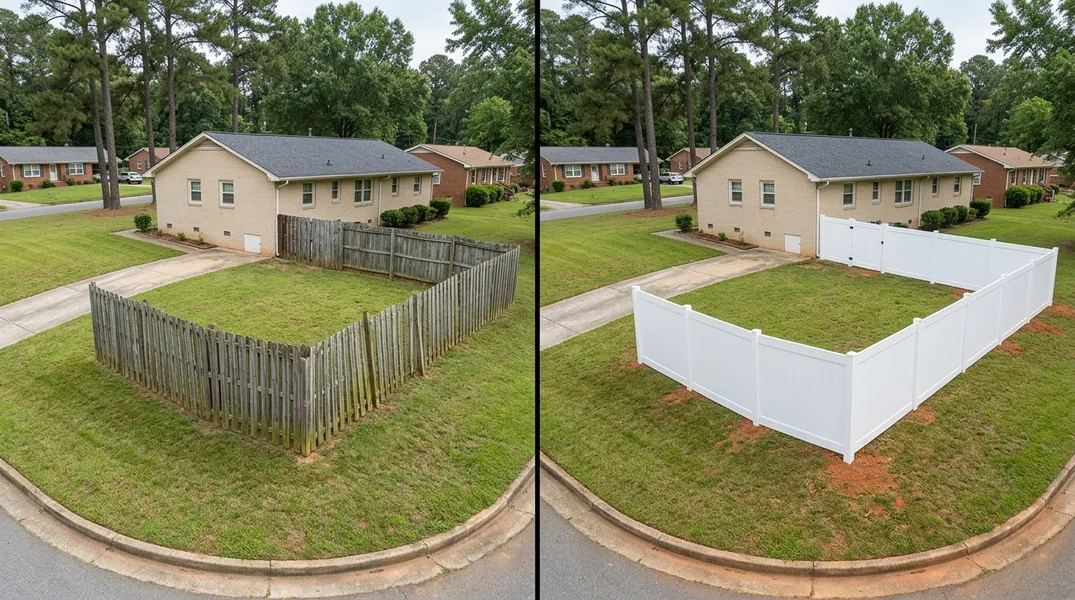
Understanding Your Fence Material Options
When you're ready to invest in a new fence for your Durham home, the material you choose will shape your experience for years to come. The three most popular options for residential fencing are wood, vinyl, and aluminum, each with distinct advantages and trade-offs. Your choice depends on your priorities: aesthetic appeal, long-term maintenance, budget, and how well the material withstands Durham's climate.
Wood fencing has been a favorite among homeowners for generations, offering a natural, warm appearance that complements nearly any architectural style. Vinyl and aluminum have emerged as modern alternatives that promise lower maintenance and greater durability. Understanding the differences between these three materials is essential before you commit to a fence project. Each material has unique characteristics that affect everything from installation to long-term care, and some homeowners even discover they need repairs like leaning fence repair or fence post replacement sooner than expected with certain materials.
Wood Fencing: Classic Beauty with Maintenance Demands
Wood & Privacy Fence Installation remains the most popular choice for homeowners who value curb appeal and natural aesthetics. Wood offers warmth and character that synthetic materials simply cannot replicate. Whether you prefer a rustic split-rail design, a traditional picket fence, or a solid privacy fence, wood provides endless customization options. The natural grain and color variations give your yard a distinctive, established look that many homeowners find worth the investment.
However, wood requires consistent maintenance to remain in good condition. In Durham's humid climate with seasonal temperature fluctuations, wood is vulnerable to rot, warping, and insect damage. You'll need to stain or seal your fence every two to three years to protect against moisture and UV damage. Over time, wood posts can develop issues like rot and structural weakness, which may require rotted fence post repair or complete fence post replacement. Despite these maintenance demands, many homeowners feel the classic appearance justifies the effort. Wood typically costs less upfront than vinyl or aluminum, making it an attractive option for budget-conscious buyers.
Vinyl Fencing: Low Maintenance with Modern Convenience
Vinyl & PVC Fence Installation has gained tremendous popularity over the past two decades as manufacturing has improved the quality and appearance of these materials. Vinyl fences are manufactured from PVC plastic, which resists moisture, insects, and UV rays without requiring staining, sealing, or painting. For homeowners who want the look of wood without the constant upkeep, vinyl offers an appealing middle ground.
The primary advantage of vinyl is its minimal maintenance requirements. A simple wash with a garden hose or mild soap keeps your vinyl fence looking fresh year-round. Unlike wood, vinyl won't rot, splinter, or warp, and it won't attract termites or other wood-boring insects. This durability translates to fewer repair emergencies over the fence's lifetime, though vinyl can occasionally develop cracks if struck with significant force. The initial pricing for vinyl is higher than wood, but the reduced maintenance costs often balance out the investment over 15 to 20 years. Vinyl comes in various colors and styles, from traditional white pickets to wood-grain textures that closely mimic authentic wood fencing.
Aluminum & Ornamental Iron Fencing: Elegant and Durable
Aluminum & Ornamental Iron Fencing represents the premium option for homeowners seeking sophisticated elegance combined with exceptional longevity. Aluminum is lightweight, rust-resistant, and maintains its appearance without painting or staining. The ornamental designs available with aluminum fencing add a formal, upscale quality to any property, making it particularly popular for front yards and high-visibility areas.
Aluminum fencing requires virtually no maintenance beyond occasional cleaning, and it will not rot, warp, or attract insects. Its lightweight nature makes installation easier than heavy wood or vinyl, and repairs are typically straightforward. The main drawback is cost, as aluminum and ornamental iron fencing commands premium pricing compared to other materials. Additionally, aluminum's open-design nature means it doesn't provide the privacy that solid wood or vinyl fences offer, making it better suited for decorative purposes rather than screening. For homeowners prioritizing aesthetics, durability, and minimal maintenance, aluminum is an excellent investment that will enhance your property's curb appeal for decades.
Durability and Weather Resistance in Durham's Climate
The climate in Durham presents specific challenges for fence materials. With hot, humid summers and occasional ice storms in winter, your fence must withstand moisture, temperature swings, and intense UV exposure. Wood fencing is most vulnerable to these conditions, as the constant humidity and seasonal changes accelerate rot and warping. Even well-maintained wood fences typically last 15 to 20 years in Durham's environment before significant replacement becomes necessary.
Vinyl and aluminum both excel in Durham's climate. Vinyl's PVC composition naturally resists moisture and won't rot or warp, making it ideal for humid regions. Aluminum similarly handles temperature fluctuations and moisture without degradation. Both materials can last 25 to 30 years or longer with minimal maintenance. If you're concerned about longevity and weather resistance, vinyl and aluminum are superior choices, though they require a higher initial investment than wood. That said, if you're experiencing issues with an existing fence, problems like leaning fence repair or fence post repair may indicate it's time to consider a material upgrade.
Cost Comparison and Long-Term Value
When evaluating fence options, it's essential to consider both upfront costs and long-term expenses. Wood fencing typically has the lowest initial cost, making it attractive for homeowners working with tight budgets. However, annual maintenance, staining, and eventual repairs add up significantly over time. A wood fence might cost $15 to $25 per linear foot installed, but expect to spend $500 to $1,500 annually on upkeep for a 100-foot fence.
Vinyl fencing costs $20 to $40 per linear foot, roughly double the price of wood, but eliminates ongoing maintenance expenses. Over a 20-year period, vinyl often proves more economical than wood when you factor in maintenance costs and potential rotted fence post repair or replacement. Aluminum and ornamental iron fencing commands the highest upfront pricing, ranging from $30 to $60 per linear foot, but offers exceptional durability and minimal maintenance costs. To understand the true value of each option for your specific situation, contact Durham Fence Company at (984) 380-1829 for a free estimate tailored to your property and preferences.
Looking for a professional fence contractor in Durham? Durham Fence Company responds fast for all your fence needs.
Get a Free Quote