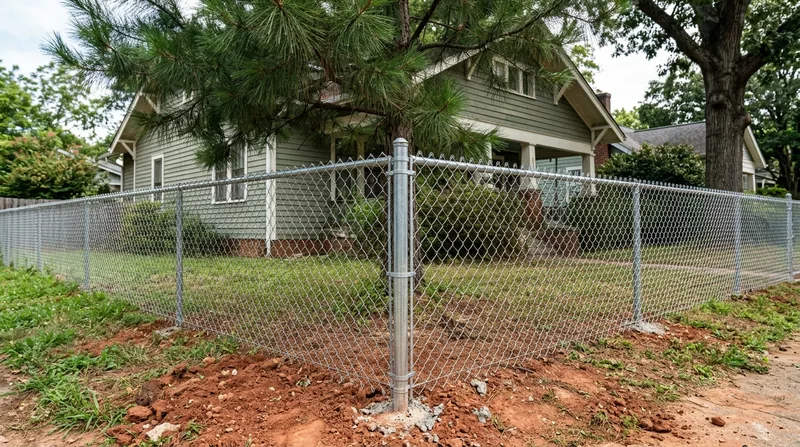




Chain link fence installation in Durham remains a practical choice for residential and commercial properties across the Piedmont. Our clay soil and seasonal ice make post depth and concrete set critical to durability, and the mix of established neighborhoods and newer subdivisions means fence lines must often satisfy both HOA rules and local setback codes. Chain link offers transparency, affordability, and longevity when installed correctly on solid footings. We set posts deep enough to hold square through wet winters and taut through ice-storm season, using galvanized or powder-coated fabric to match your property's character and budget.
Why Chain Link Fencing Matters in Durham's Residential Landscape
Chain link still holds its place on Durham's older bungalow streets, running along narrow lots shaded by oak and poplar where privacy fences would cast too much shadow. The material suits our clay soil because posts can be set deep without excessive digging, and the open weave drains water rather than trapping it against wood. In fast-growing suburbs like North Durham and near Chapel Hill, HOAs often permit chain link when they restrict wood or vinyl, and the cost per linear foot makes it the entry point for homeowners securing a property line or containing dogs without a six-figure investment.
- Posts set in concrete hold true through wet clay and freeze-thaw cycles that loosen tamped-only footings.
- Galvanized steel resists rust in our humid climate better than bare wire, and powder-coated finishes add color without maintenance.
- Open mesh allows sight lines and air movement, reducing wind load on posts and avoiding the moisture trap that rots wood at the ground line.
- Gauge and mesh size determine strength and appearance, with heavier gauges lasting decades on residential lots.
A properly installed chain link fence on our red clay typically lasts 20 to 30 years, longer than wood on the same soil, making it a sound long-term choice for the money.
Local example: A 1970s bungalow in Walltown with a failing wood fence and shallow post holes chose chain link on 3-foot concrete footings. The new fence cost less than half a wood replacement and will likely outlast the homeowner's tenure, a common calculation in Durham neighborhoods where deferred maintenance is the norm and budget matters.
For permit and regulation details specific to your neighborhood or HOA, the Durham County Department of Development Services and your local HOA architectural guidelines are the source of truth on height, setback, and material rules.
How We Install Chain Link Fencing: Depth, Tension, and Durability
Chain link installation looks simple but fails fast if posts are shallow or fabric is loose. We start by calling 811 for utility locates (required by North Carolina law), then mark the fence line and set posts on 6-foot centers, digging to 30 to 36 inches depending on soil stability and frost depth. Each post gets a concrete collar that extends 6 to 8 inches above grade, keeping the wood or metal base away from standing water. We then stretch fabric using a tension band and stretcher bar, keeping the mesh tight and level so it won't sag or wave in wind.
- We call 811 to locate utilities before digging any post hole, a legal requirement that prevents costly and dangerous mistakes.
- Posts are set in concrete to a depth that resists heave and settlement, critical in Durham's clay where frost action is real and water drainage is slow.
- Fabric is stretched using a power stretcher and locked with tension bands, eliminating the sag that invites damage and looks poor within a year.
- We use galvanized posts and hardware in standard applications, or powder-coated materials if you want color or enhanced rust resistance near salt or corrosive environments.
- Gate posts receive anti-sag bracing and heavier gauge material to handle daily swing and impact without twisting.
The entire process takes 1 to 3 days depending on lot size, soil conditions, and whether existing fence must be removed first. See our fence post repair page for guidance on replacing individual posts if settling or damage occurs.
Real scenario: A Morrisville property with a sloped lot and shallow water table needed 40 linear feet of chain link around a dog run. We racked the fence (stepped it down the slope) to keep the bottom 2 inches clear of grade at all points, preventing water pooling and rust. Posts were set 36 inches deep in concrete, and the job held square through two seasons of heavy rain and one ice storm.
Chain Link Fence Materials and Installation Methods
| Approach | Description | Best for |
|---|---|---|
| Standard Galvanized Chain Link | Hot-dipped galvanized steel posts and fabric, 11 or 9 gauge, 1.25-inch or 2-inch mesh. Affordable, durable, low maintenance. Silver-gray appearance. | Residential dog runs, property lines, rental properties, and budget-conscious homeowners in Durham and surrounding areas. |
| Black Powder-Coated Chain Link | Galvanized or aluminum posts and fabric coated with black polyester powder. Blends with landscaping, resists rust and UV fade. Slightly higher initial cost, zero ongoing paint or stain. | Homeowners who want a finished look, properties in sight corridors, and HOA-governed subdivisions where silver galvanized is restricted. |
| Chain Link with Privacy Slats | Vinyl or wood slats woven into the mesh, creating a solid visual barrier while retaining the strength of chain link. Available in green, tan, brown, or custom colors. Slats eventually fade and may need replacement after 5-10 years. | Yards where neighbors are close, pools requiring visual screening, and properties where HOA rules forbid solid privacy fences but allow slats. |
| Aluminum Chain Link | Lightweight, non-rusting aluminum fabric and posts. Never requires painting. Slightly weaker than steel but adequate for residential use. Premium cost. | Coastal or corrosive-air environments, properties where weight is a concern, and homeowners prioritizing zero maintenance over decades. |
Chain Link Fence Installation Cost in Durham: What to Expect
Chain link fence installation cost in Durham typically starts at $18 per linear foot for standard galvanized material with posts set in concrete on a level lot. That ballpark assumes clear access, no existing fence removal, and straightforward soil conditions. The final price depends on several real-world factors: whether the lot is sloped (racked installation costs more), soil type and drainage (clay slows digging), tree roots or rocks in the post holes, gate openings, and whether you choose powder-coated or privacy slats (both add cost). A 100-foot residential fence on a flat, clear lot in Cary or Raleigh might run $1,800 to $2,200. The same job on a sloped Durham property with clay and existing fence removal could be $2,400 to $3,000.
Getting 2 to 3 estimates from local installers is smart because every property is different. We include a free on-site estimate with no obligation, and we explain upfront what moves the price: soil conditions, slope, access, and material choices. Visit our pricing page for a detailed breakdown of costs by material and scope, or call (984) 380-1829 to schedule a walk-through.
Hiring a Chain Link Fence Installer Near Me: What Durham Homeowners Should Know
Choosing the right fence installer matters because a poorly installed fence will fail within a few years, and fixing it costs more than doing it right the first time. Start by asking for references and checking recent work in your neighborhood or similar soil and terrain. Verify that the installer is fully insured with general liability and workers' compensation coverage, and ask for a certificate of insurance naming your address. North Carolina has no state license for fence installation, but projects at or above $40,000 require a licensed general contractor; we are upfront about that threshold and will tell you if your scope crosses it. Ask about permits: some Durham jurisdictions require them, others do not, and your HOA may have additional rules. A good installer will walk you through what applies to your property and help you understand the timeline.
- Request written estimates from at least two local installers, with a detailed breakdown of material, labor, and any removal or site prep.
- Verify full insurance coverage and ask for proof; do not accept a verbal promise or a discount for paying cash.
- Ask whether the installer will call 811 for utility locates and pull permits if required by your city or county.
- Check references from recent jobs in Durham, Chapel Hill, or Cary, ideally on similar soil and lot size.
- Understand your HOA rules on fence height, material, and color before you commit; many Durham subdivisions restrict height to 4 or 5 feet in front yards.
We are AFA Member Installers (American Fence Association), in business since 2016, and we stand behind our work with a warranty on materials and labor. Contact us at durham-fence.com/contact or (984) 380-1829 for a free estimate and honest advice on whether your fence needs repair or replacement.
Chain Link Fence Installation in Durham: Pricing Guide
| Service | Price | Details |
|---|---|---|
| Standard Galvanized Chain Link | Starting at $18/ft | Posts set in concrete, 11 gauge fabric, 1.25-inch mesh, includes labor and materials on level terrain |
| Black Powder-Coated or Colored Chain Link | Starting at $22/ft | Galvanized or aluminum posts with color-matched fabric, adds visual appeal and extended rust protection versus standard galvanized |
| Chain Link with Privacy Slats | Starting at $26/ft | Vinyl or wood slats woven into mesh, adds visual barrier and cost, ideal for pools or close neighbors in HOA-governed subdivisions |
| Sloped Installation or Site Challenges | On estimate | Racked (stepped) installation on sloped lots, clay with slow drainage, tree roots, or existing fence removal require on-site assessment |
| Travel and Estimate | Included / Free | No mileage fee within Durham and surrounding service areas; free on-site estimate with 24-hour response, no obligation to book |
Indicative pricing, the exact cost depends on square footage, finish, and site access. Free personalized estimate within 24h at (984) 380-1829.


