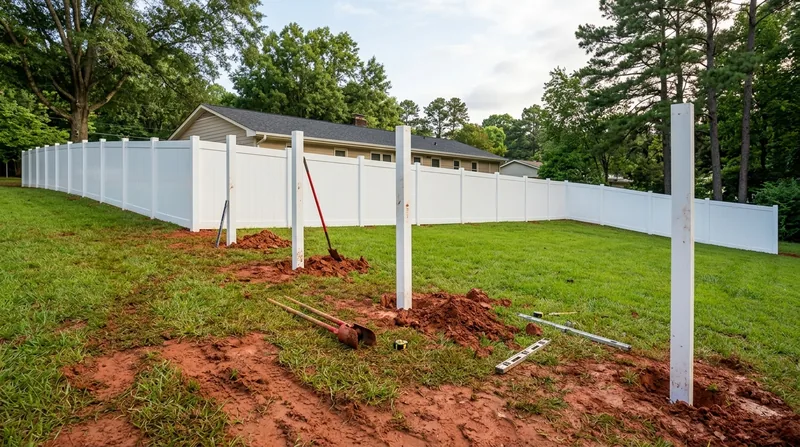




Vinyl & PVC fence installation in Durham solves the moisture problem that haunts wood fences in the Piedmont. Our clay soil holds water after rain, and untreated wood rots at the ground line within five to seven years. Vinyl panels shrug off Durham's humid summers without swelling, splitting, or the maintenance burden that cedar and pressure-treated pine demand. We set posts through wet clay with footings that drain rather than trap water, keeping fence lines steady on the gently rolling lots common across town and in the surrounding suburbs of Chapel Hill, Cary, and Morrisville. Since 2016, we've installed vinyl privacy fences, stepped and racked installations on sloped yards, ornamental vinyl gates, and pool barrier fencing for homeowners who want durability without the constant staining and sealing cycle.
Why Vinyl & PVC Fence Installation Makes Sense in Durham's Climate
Vinyl and PVC panels resist the rot and decay that plague wood in Durham's humid subtropical climate. Unlike cedar or pressure-treated pine, vinyl does not absorb moisture, swell in summer rain, or contract in dry spells. The material holds its color without staining or sealing, and it stands up to the inland remnants of Atlantic hurricanes and the heavy thunderstorms that roll through from June through November. When installed on properly drained post footings, a vinyl fence line stays plumb and level through freeze-thaw cycles and the seasonal saturation of our red clay.
- Vinyl panels do not rot, warp, or splinter as wood does in wet conditions.
- Posts set in concrete footings that slope away from the post prevent water from pooling at the base.
- Vinyl requires no staining, sealing, or annual maintenance to prevent decay.
- The material tolerates storm damage better than wood and is simpler to repair or replace a single panel without rebuilding the entire section.
- Vinyl fences meet HOA architectural standards in master-planned communities across Durham, Chapel Hill, Cary, and Apex, where height, material, and color restrictions are common.
A vinyl fence line installed with proper post spacing and drainage lasts 20 to 30 years with no structural failure from moisture.
Key info: Durham and surrounding jurisdictions set fence height and setback rules differently. Typical residential height limits are 4 to 6 feet, with 3-foot limits in front yards and corner visibility zones. Always check with your city or county building department and your HOA architectural guidelines before ordering panels. We verify local rules as part of the estimate.
For more on wood alternatives and other materials, see our wood and privacy fence installation page.
How We Install Vinyl & PVC Fences in Durham: The Process
Vinyl fence installation starts with a property walk to understand the terrain, identify utilities, and determine whether the fence line will be racked (panels angled to follow a slope) or stepped (panels level with vertical drops between sections). We call for a free utility locate through North Carolina 811 before digging any post holes, because hitting buried lines creates liability and safety risk. Posts are set 6 feet apart in most cases, with concrete footings dug below the frost line and sloped to shed water away from the post base. Once posts are plumb and the concrete cures, we attach vinyl rails and panels, ensure all hardware is tight, and walk the line with you before we leave the site.
- We measure the fence line and verify property boundaries against your existing survey or your marked line.
- A free North Carolina 811 utility locate is called and marked before any post holes are dug.
- Posts are set in concrete footings that slope away from the post to prevent water from pooling at the base.
- Vinyl rails and panels are attached with stainless steel or galvanized hardware to prevent corrosion in Durham's humid climate.
- The completed fence is walked with you to confirm height, alignment, and gate operation if gates are part of the job.
A typical residential vinyl fence installation takes two to five days depending on yard size, terrain, and whether gates are included.
Local example: A sloped lot in Carrboro requires a racked installation, where panels angle to follow the slope and reduce the visual mass of the fence. A level lot in Durham's older neighborhoods allows a standard side-by-side installation with no angle. We determine the best approach on site and explain the visual and cost difference before we start.
Learn more about fence post repair and replacement if an existing post needs attention before new panels are hung.
Vinyl & PVC Fence Installation Methods and Approaches
| Approach | Description | Best for |
|---|---|---|
| Standard Side-by-Side | Vinyl panels hang vertically between posts on level ground. Posts are set 6 feet apart in concrete footings. Rails run horizontally and support the panels. | Level residential yards in Durham and Chapel Hill where HOA rules allow standard height and material. |
| Racked Installation | Entire fence panel assembly angles to follow a slope without creating steps. Rails and panels tilt together, maintaining a consistent slope angle from post to post. | Sloped lots in Morrisville, Cary, and Chapel Hill where stepped installations would look awkward or violate HOA guidelines. |
| Stepped Installation | Panels remain level as the fence line descends a slope, creating horizontal steps between sections. Each section sits at a different elevation. | Steep slopes where racking is not practical or where homeowners prefer the stepped visual effect. |
| Vinyl Privacy Fence with Cap and Trim | Vinyl boards installed board-on-board or side-by-side with matching vinyl cap rail and trim pieces to conceal post tops and rail ends, creating a finished look. | Residential privacy fences in Durham and surrounding suburbs where a polished appearance and complete weather seal are desired. |
Vinyl & PVC Fence Installation Cost in Durham: What to Expect
Vinyl fence installation in Durham typically starts at $40 per linear foot for a basic privacy fence with standard post spacing and concrete footings. The final cost depends on several factors: whether the lot is level or sloped (racked installations cost more than standard), the height and thickness of the vinyl panels you choose, the number of gates, site access for equipment and crews, and local permitting requirements. A typical 150-foot residential fence runs $6,000 to $9,000 before any gate installation. We recommend getting two or three estimates from local installers so you understand what is included at each price point and why costs vary.
Factors that move vinyl fence costs upward include steep slopes requiring extensive racking or stepping, limited site access that slows post-hole digging, high-wind zones that demand closer post spacing or reinforced rail bracing, ornamental vinyl gates with self-closing hardware, and local permitting fees. We provide a detailed written estimate that breaks down materials, labor, and any permit costs so you know exactly what you are paying for. Visit our full pricing overview for detailed cost guidance by material and job type.
The best way to understand your actual cost is to request a free estimate by calling (984) 380-1829 or visiting our contact page. We respond within 24 hours and walk your property to give you a firm price.
Vinyl & PVC Fence Installation Near Me: What to Look For When Hiring in Durham
Hiring the right vinyl fence installer matters because poor post footings and improper drainage lead to post failure within a few years, especially in Durham's wet clay. When you call a fencing contractor, ask whether they set posts in concrete footings that slope away from the post base (this prevents water from pooling and rotting the post). Confirm that they call for a free North Carolina 811 utility locate before digging, and ask to see a certificate of insurance covering general liability and workers' compensation. Check references from recent jobs in your neighborhood, and ask whether the installer has experience with racked versus stepped installations if your lot is sloped.
Fence licensing in North Carolina is set county by county, and some jurisdictions require a permit while others do not. Projects at or above $40,000 require a licensed general contractor. Always verify permit requirements with your local building department and your HOA architectural committee before signing a contract. We are fully insured and can provide a certificate of insurance on request. Since 2016, we have held membership with the American Fence Association, and we work with homeowners and their HOA representatives to ensure every installation meets local code and architectural standards.
Contact us at (984) 380-1829 to request a free estimate and speak with a local installer who knows Durham's terrain and regulations.
Vinyl & PVC Fence Installation in Durham: Pricing Guide
| Service | Price | Details |
|---|---|---|
| Vinyl Privacy Fence, Standard Installation | Starting at $40/ft | Level residential yard with 6-foot post spacing and concrete footings, includes rails, panels, and hardware |
| Vinyl Privacy Fence, Racked or Stepped | Starting at $50/ft | Sloped lot requiring racked or stepped installation to follow terrain; more labor and careful layout than level ground |
| Vinyl Fence with Gates | Gate from $800 to $2,500 | Single swing gate, hardware, and hinges; ornamental vinyl gates and self-closing hardware increase the price |
| Vinyl Fence Removal and Haul-Away | Starting at $15/ft | Removal of existing fence, post extraction, debris haul; cost varies with post material and site access |
| Free Estimate | No charge | Property walk, measurements, slope assessment, and written quote within 24 hours at (984) 380-1829 |
Indicative pricing, the exact cost depends on square footage, finish, and site access. Free personalized estimate within 24h at (984) 380-1829.


