Fence Company in Durham, NC: Installation, Repair & Gates
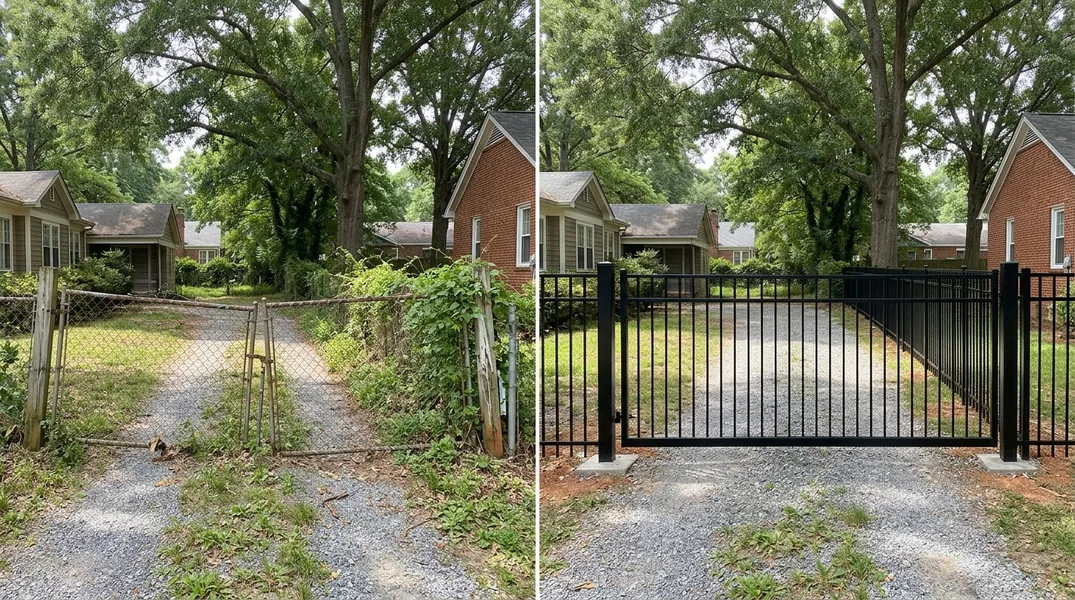
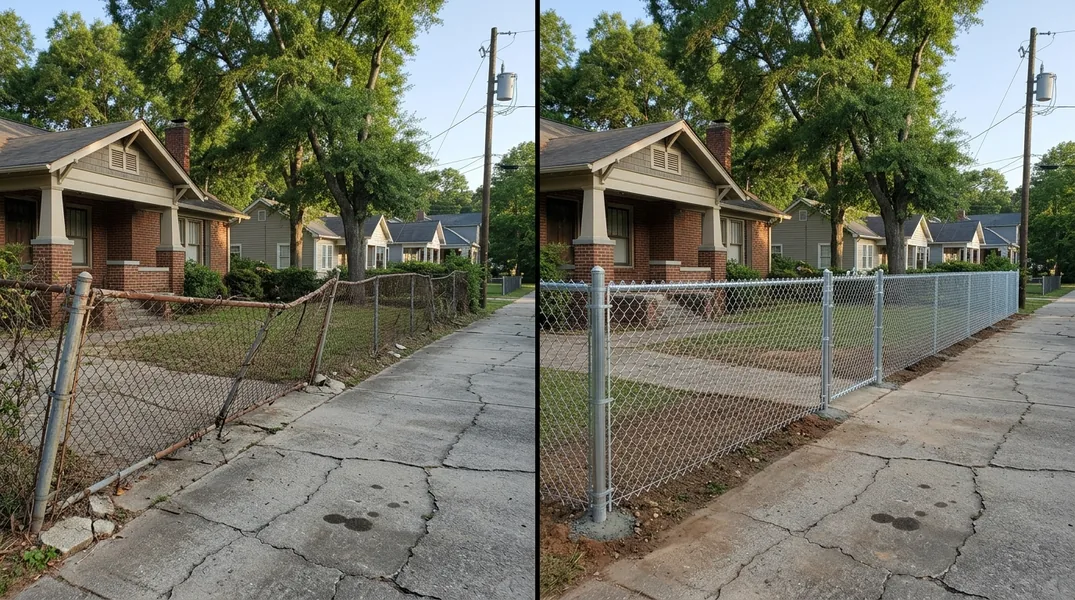
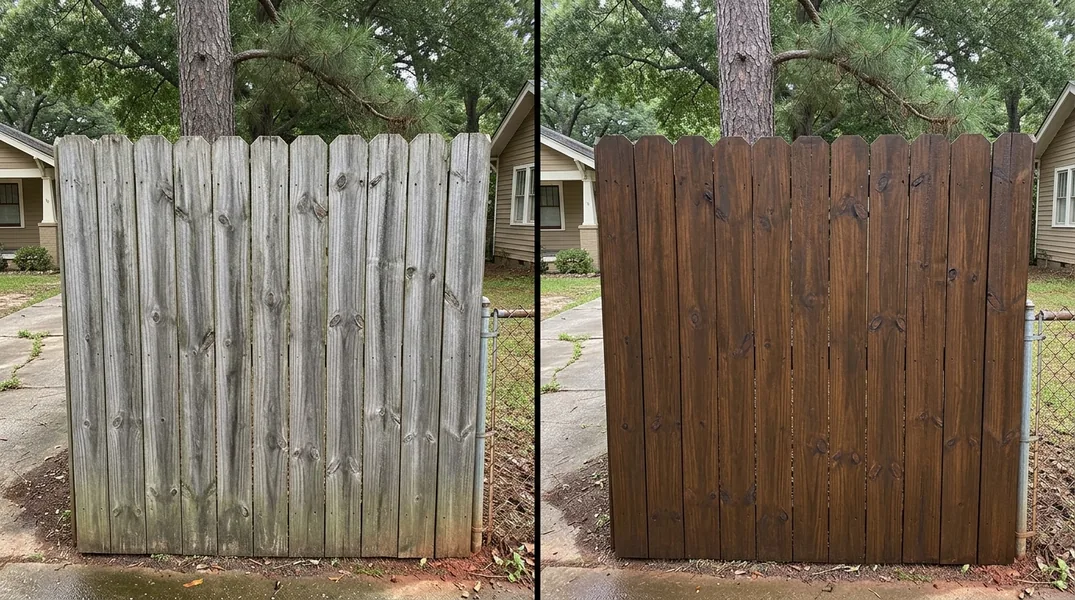
Homeowners searching for a fence company near me in Durham turn to Durham Fence Company for new installation, repair, gates, and storm damage work across the city and surrounding areas including Chapel Hill, Cary, Morrisville and beyond. We handle wood and privacy fence, vinyl and PVC, chain link, aluminum and ornamental iron fencing, pool barriers, automatic driveway gates, and everything from a leaning post to a full fence replacement. The same crews do the work, they know this red clay soil and this housing stock, and they are not dispatched from a call center.
Every neighborhood in Greater Durham has fences, and nearly all of them sit on Piedmont clay that swells when wet and shrinks when dry, working posts loose season after season. Summer thunderstorms and the inland remnants of Atlantic hurricanes drive repair calls from June through November. Winter wet and ice bring more. A fence that leans here is almost always a post problem, not a panel problem, and the difference between a repair that holds and a replacement that costs more than it should comes down to honest diagnosis. Call (984) 380-1829 for a free estimate.
Why Fences Lean in Durham: Clay Soil and Rotted Posts
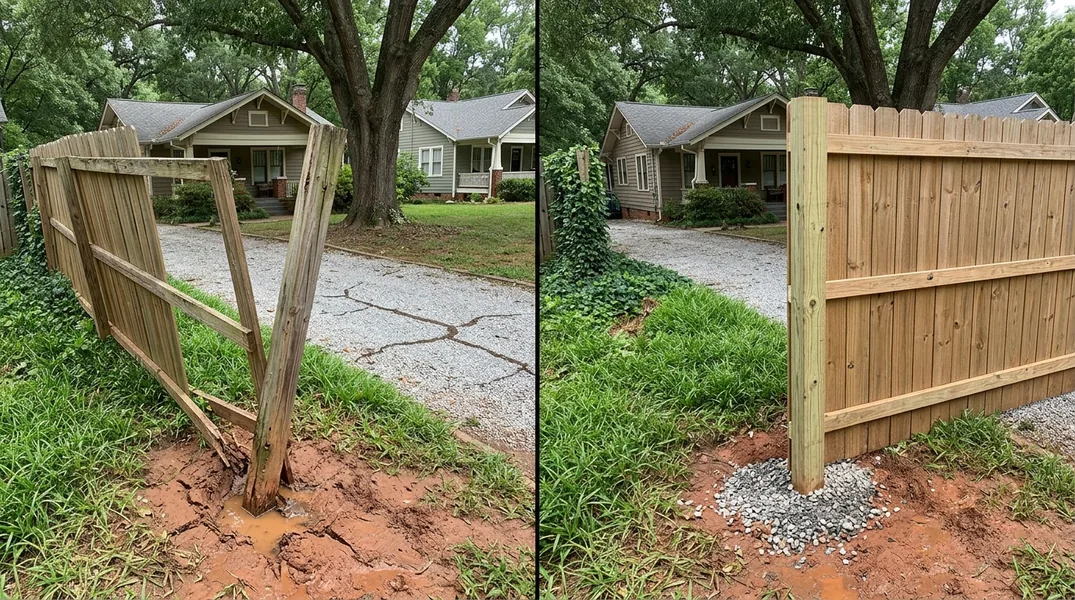
A fence leans in Durham because the clay beneath it works. When the ground is wet, expansive clay swells; when it dries, it shrinks. A post set in tamped clay or in concrete that does not go deep enough moves with that cycle, racking back and forth a fraction of an inch each season. Over five years, a fraction of an inch becomes a lean. Over ten years, it becomes a fall. At the same time, moisture at the ground line keeps wood damp exactly where the post carries the weight, and untreated pine or cedar begins to rot there. A post that has rotted at grade has no strength left, and the fence leans or falls. Most leaning fences in this market are a post problem, not a panel problem.
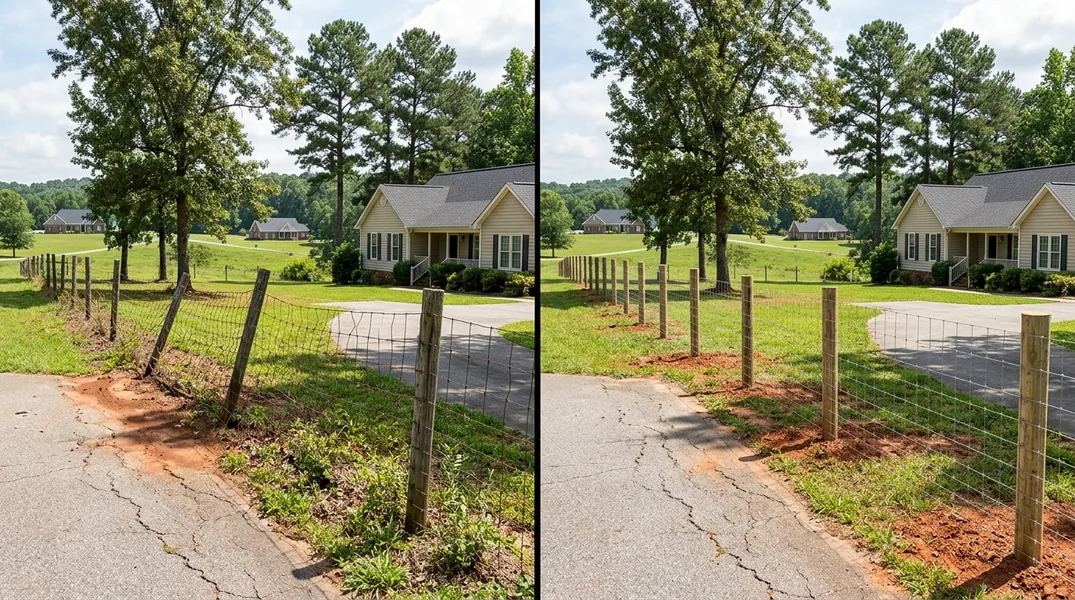
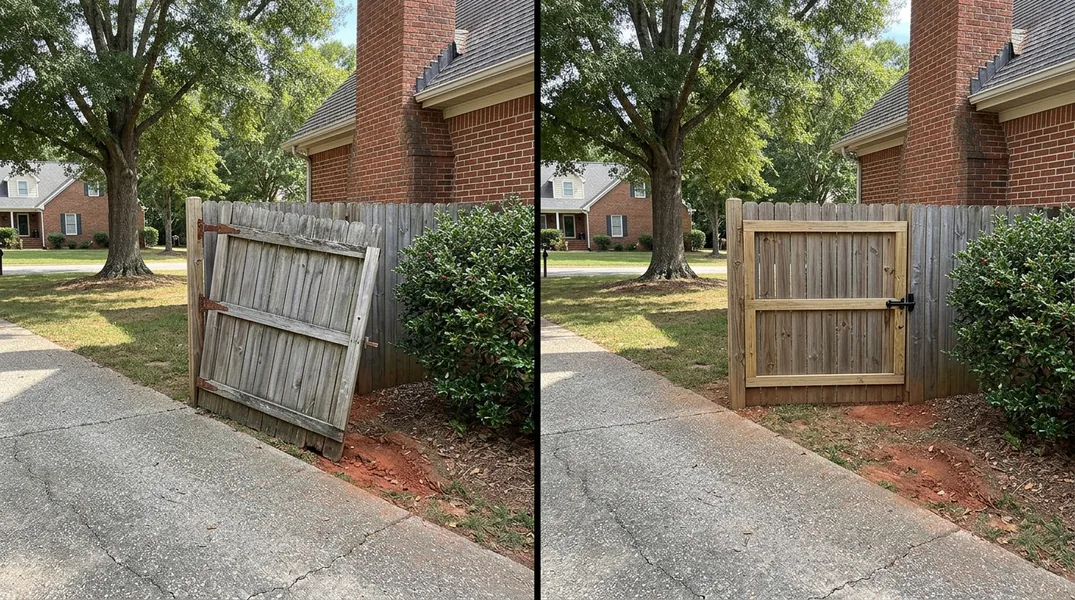
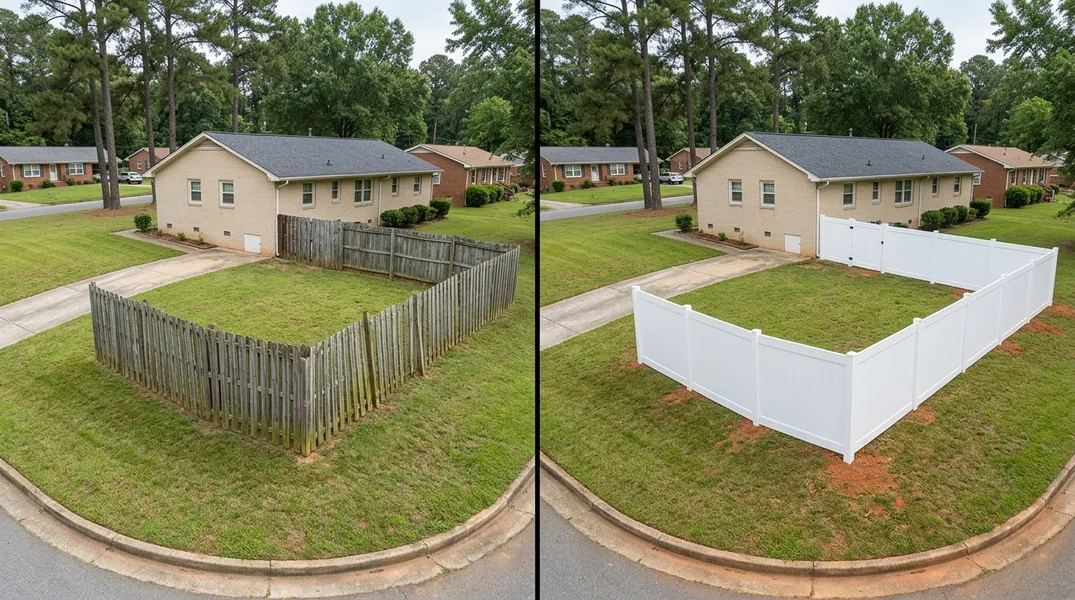
We read a fence line by walking the whole run, not the one section a homeowner called in about. We test every post, not just the one that moved. We check whether the concrete footing itself has heaved out of the ground or the post has failed inside a sound footing. We look at the pickets and rails to see whether they are sound or whether the whole fence is at end of life. That diagnosis decides what we quote. A fence with sound pickets and rails and a handful of failed posts is worth repairing. Resetting or replacing those posts in new concrete set below the frost line and below the active clay layer saves the rest of the fence and costs far less than a full replacement. A fence where the posts have rotted at the ground line along the whole run is at end of life, and repairing it section by section costs more over five years than replacing it once. We quote both when both are real options, and we tell you which one makes sense. On rotted wood, we replace it. Moisture at the ground line is the cause. We do not perform termite or pest inspections, apply chemical treatments, or carry out pest control, which is a separate regulated trade in North Carolina. Call (984) 380-1829 to have us walk your fence line, or request a free estimate. If repair is the right call, we explain why. If replacement is better, we say so.
Fence post failure is one of the most common repairs we handle, and Fence Post Repair & Replacement covers the full range: setting a single post in new concrete, replacing multiple posts in an otherwise sound fence, and resetting posts that have heaved. The cost depends on how many posts have failed, how deep they need to go, and whether the fence itself is sound enough to keep. We price by the linear foot on site.
Storm Damage Fence Repair in Durham
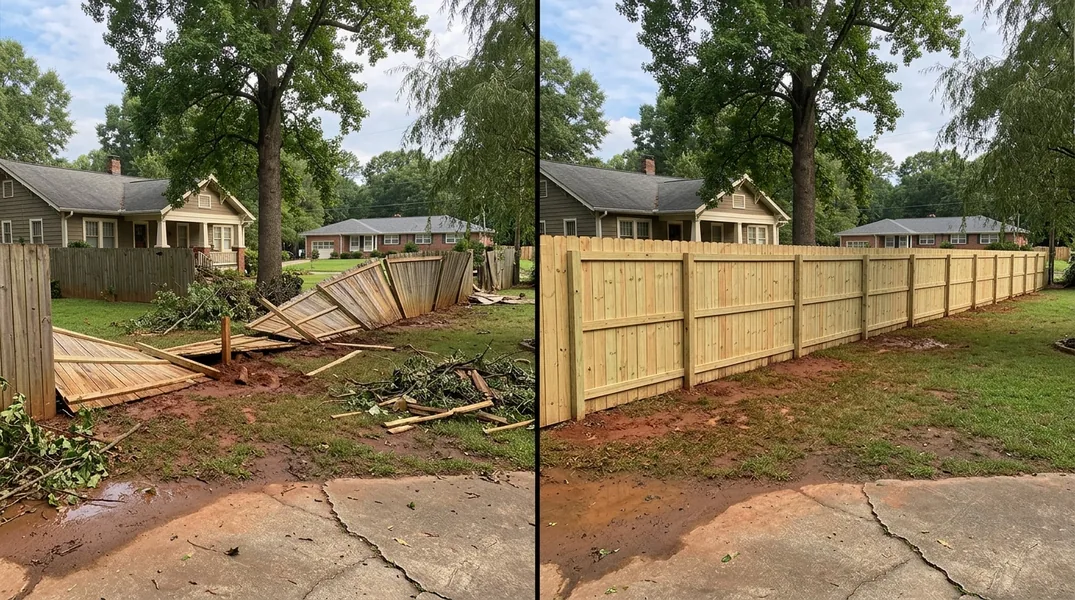
Summer thunderstorms and the inland remnants of Atlantic hurricanes push fences over in whole runs. Winter ice snaps posts at grade. Panels go missing, pickets splinter, and a fence that stood for ten years can be on the ground in an hour. When that happens, the rebuild is a chance to do it better. Posts that failed in tamped clay can go into concrete set below the frost line. Posts that rotted at grade can be reset with the footing deeper and the post protected. A fence rebuilt after a storm should come back stronger than the one that came down.
We assess storm damage free of charge, document it section by section with photographs, and provide a written estimate you may choose to give your insurance carrier. We help you document what happened and what it costs to put right. Coverage decisions rest with your carrier, not with us, and we do not speculate on what your policy will pay. No deductibles are waived or absorbed by us. If you have questions about your coverage, your insurance company is the place to ask. For damage assessment and a repair estimate, call (984) 380-1829 or request a Storm Damage Fence Repair estimate.
Cedar, Pine, Vinyl or Chain Link: Choosing for This Climate
Choosing a fence material for Durham means balancing maintenance, durability, and cost under Piedmont sun and humidity. Cedar is beautiful and weathers to gray, but under this climate it wants cleaning and re-staining every two to three years to stay sound. That cycle is what decides whether a cedar fence lasts closer to ten years or closer to twenty. Pressure-treated pine costs less and holds up longer without staining, though it never has cedar's looks. Vinyl and PVC require no staining and no painting, shed dirt easily, and do not rot at the ground line. They do not look like wood, they expand and contract with temperature, and in strong wind they flex more than wood does. Chain link is the toughest fence per dollar and comes in galvanized (silver, rust-resistant) or black powder-coated (darker, lower glare). Gauge and mesh size matter: smaller mesh and heavier gauge cost more and hold up to impact better. Aluminum and ornamental iron fence suit front yards and pool barriers, rack to follow grade on sloped lots, and carry a higher price than wood or vinyl.
The right choice depends on what you want the fence to do, how much maintenance you are willing to do, and your budget. We quote by the linear foot on site, because slope, access, tear-out and gate count change the number. A Wood & Privacy Fence Installation on a level lot costs less than the same fence on a steep slope where posts must be stepped or racked to follow grade. A Vinyl & PVC Fence Installation removes the staining cycle but costs more upfront. Chain Link Fence Installation in the right gauge and mesh is economical and durable. Aluminum & Ornamental Iron Fencing suits specific applications where appearance and racking matter most. We walk your property, understand what the fence needs to do, and help you choose the material that makes sense.
Permits, HOA Rules, Property Lines & Pool Barriers
Fence height, setback, corner visibility, and material rules are set by the city or county and vary across Greater Durham. In most jurisdictions a permit is required before a fence goes in, though some areas do not require one for residential fencing below a certain height. Many cities in the area require a setback from the property line, and some have rules about corner visibility at intersections. In master-planned communities and subdivisions governed by a homeowners association, deed restrictions and HOA architectural standards commonly govern fence height, material, and color. Architectural approval is usually required before work starts. It is worth checking your HOA documents or contacting your architectural committee before you call us, so we can quote you on a fence that will be approved. We work from the property line you identify, using your existing survey or plat. Determining a property boundary is the work of a licensed land surveyor, and we do not perform surveys or offer opinions on where a line lies. Before we start, confirm the fence line with your neighbor and put any agreement in writing, and verify that your neighbor or the association has no objection.
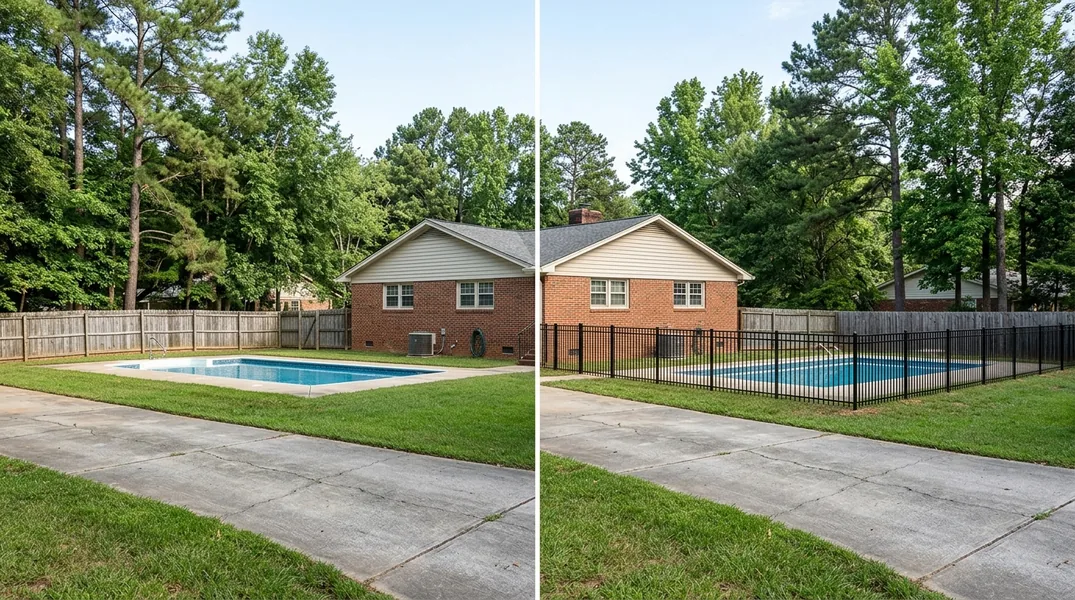
Pool fencing is installed to meet the local pool barrier codes that apply at your address, with self-closing self-latching hardware on every gate. We do not certify compliance with those codes. Final determination of whether a barrier meets code rests with the local building official. No barrier replaces supervision. Setting fence posts is excavation, and we request North Carolina 811 utility locates before digging any post holes. Locates cover participating operators only and do not mark private lines such as irrigation or landscape lighting. Tell us about any private utility lines on your property so we can avoid them. Requirements vary, always verify with the Durham building department and your HOA before starting your project. Call (984) 380-1829 or request a free estimate and we will help you understand what applies to your property.
Ready to get started? Durham Fence Company serves in Durham and surrounding areas. Book your free on-site estimate today.
Get Your Free Estimate