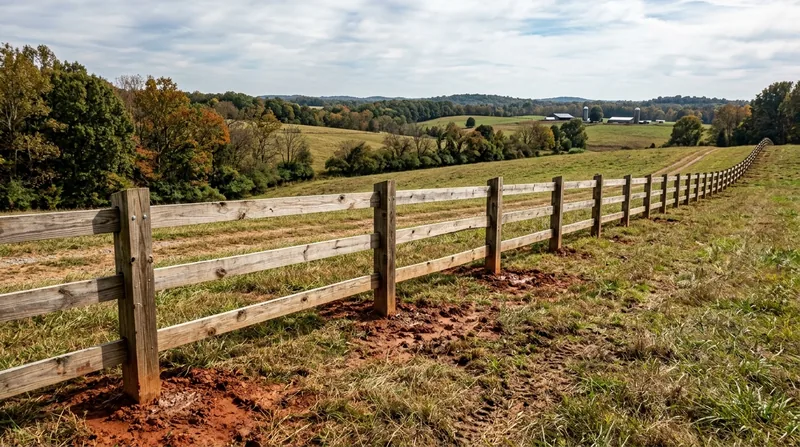




Farm fence installation in Durham demands more than standard residential fencing know-how. Our rolling Piedmont terrain, red clay soil that holds water for weeks after rain, and the mix of established neighborhoods with fast-growing suburban acreage create real challenges for post longevity and rail spacing. Cattle and horses need different fence geometry than privacy screening, and the difference between a racked installation on sloped ground and a stepped one is the difference between a fence that lasts fifteen years and one that fails at the posts in five. We build farm and ranch fencing across Durham, Chapel Hill, Cary, and the surrounding counties with the post depth, concrete setting, and rail spacing that handles both the soil and the animals you're containing. AFA Member Installer since 2016.
Why Farm and Ranch Fencing Matters on Durham Acreage
Farm fencing on the county's rolling ground has to hold through saturated clay bottoms and open pasture where wind load and animal pressure are constant. A residential privacy fence set in tamped soil might last years in a drier climate; in Durham, that same post sits in standing water after a spring rain and rots at the ground line within two to three seasons. Posts for farm fencing go deeper, into concrete footings, and rails are spaced to contain livestock without creating gaps that invite escape or injury.
- Set posts below the frost line and into concrete to prevent heaving and rot in Durham's wet clay.
- Space rails for the animals you are containing, whether cattle need wider spacing or horses require closer boards to prevent entanglement.
- Choose materials that tolerate standing water and don't degrade when wet: pressure-treated pine, galvanized steel pipe, or vinyl board fencing rated for livestock.
- Install racked or stepped rails to follow the slope without creating trip hazards or gaps along the ground line.
The difference between a fence that holds for twenty years and one that fails in five often comes down to how the post is set and how the soil drains around it. Durham's heavy clay demands this precision from the start.
Key info: North Carolina requires utility locates by 811 before any digging on your property. Call 811 at least three business days before we dig post holes, or we can request the locate on your behalf. This is a legal requirement and protects buried power, gas, water, and communications lines across Durham.
How We Install Farm Fencing on Durham Property
Farm fencing installation starts with understanding what you are containing, how the ground slopes, and where utilities run. We work from your existing survey or the line you identify, mark the fence line, call 811 for utility locates, and then set posts and rails to handle both the soil and the animals. On sloped lots, we choose between racked installation, where the rails stay parallel to the slope, or stepped installation, where the posts step down the hill in increments, depending on the slope angle and what looks right for your property.
- Mark the fence line and verify setbacks with local code and any HOA architectural standards that apply to your property.
- Request a utility locate through 811 and wait for marking before any digging begins.
- Set posts at proper depth (typically 30 to 36 inches for farm fencing) in concrete footings to prevent frost heave and rot.
- Install rails racked or stepped to follow the ground, spaced for the livestock you are containing.
- Add anti-sag bracing on longer runs to keep rails straight and prevent sagging under wind and animal pressure.
On a typical acreage job in Durham, post-setting and rail installation take two to three days depending on lot size, slope, and soil conditions. We handle the utility locate, permitting questions, and all the on-site work so you do not have to.
Local example: A three-acre property in Wake Forest with a 400-foot perimeter and a moderate slope toward the rear required stepped installation to follow the grade change and racked sections on the flatter front. We set posts 36 inches deep in concrete, spaced 8 feet apart for horse containment, added anti-sag bracing on the longest run, and finished in two and a half days. The fence has held through two winters of clay saturation with no post movement or rail failure.
Farm Fencing Methods and Materials
| Approach | Description | Best for |
|---|---|---|
| Split Rail | Rustic wooden rails mortised into posts, typically 2 or 3 rails high, minimal ground contact. | Decorative boundaries and light horse containment on dry ground; not ideal in Durham's wet clay. |
| No-Climb Horse Fence | Vinyl or welded-wire mesh in a grid pattern, 4x4 or similar openings, prevents hooves and legs from catching. | Horse and livestock containment where safety and durability matter; vinyl versions tolerate Durham's moisture well. |
| Pipe Fence | Steel pipe, typically 2 to 2.5 inches, welded or bolted to posts; galvanized or powder-coated for corrosion resistance. | High-value horses and livestock that need strong visual and physical containment; resists rot and animal pressure. |
| Board Fencing | Pressure-treated or vinyl boards, 1x6 or 1x8, nailed or bolted to posts; solid or with small gaps. | Cattle and mixed livestock; vinyl boards handle Durham's wet clay better than wood and do not rot at the ground line. |
| Barbed Wire | Multiple strands of barbed wire stretched between posts; typically 4 to 6 strands spaced 12 inches apart. | Cattle on large acreage where cost per linear foot is the priority; requires regular maintenance and inspection. |
Each method trades off durability, cost, animal safety, and maintenance burden. We help you choose based on what you are containing, how long you want the fence to last, and your budget. Vinyl and galvanized materials outperform untreated wood in Durham's clay, but they cost more upfront.
Farm and Ranch Fencing Cost in Durham: What to Expect
Farm fencing costs vary widely depending on material, post spacing, terrain, and whether you need anti-sag bracing or stepped installation on slopes. Starting at $13 per linear foot for basic barbed wire on level ground with standard post spacing, and climbing to $35 to $50 per foot for vinyl no-climb horse fencing with all hardware and concrete post setting. A typical acreage job runs 300 to 800 linear feet, so a rough estimate for a three-acre perimeter might range from $4,000 to $20,000 depending on material and slope.
Factors that move the price up include sloped terrain requiring stepped or racked installation, rocky soil that slows post-digging, the need for anti-sag bracing on long runs, vinyl or galvanized materials instead of wood, and wider post spacing for larger animals. Getting two or three estimates from local fencing contractors gives you a realistic picture of what your property will cost and helps you understand what drives the differences.
For a detailed breakdown and a free estimate tailored to your acreage and animals, see our pricing page or call (984) 380-1829 for a no-obligation site visit. We respond within 24 hours and include travel across Durham and surrounding areas with no separate mileage charge.
What to Look for When Hiring a Farm Fencing Contractor Near Me
Hiring a fence contractor for acreage is a bigger commitment than a residential privacy fence, and the details matter. Look for a contractor who understands your local soil and terrain, carries full insurance with a certificate available on request, and can explain how posts will be set, why spacing matters for your animals, and whether your property needs a permit. In North Carolina, fence licensing is set by county and varies across Greater Durham; some jurisdictions require permits for fencing, others do not. Always check with your local building department and any HOA architectural standards before you start, and ask the contractor to confirm permitting requirements as part of the estimate.
- Verify that the contractor carries general liability and workers' compensation insurance and can provide a certificate on request.
- Check references from acreage jobs similar to yours, especially farms or ranches in Durham or nearby counties with similar terrain.
- Confirm the contractor understands your local code on fence height, setback, and material; ask them to pull permit information from your jurisdiction before the estimate.
- Get a written estimate that specifies post depth, concrete setting, rail spacing, material grade, and the timeline for completion.
- Ask whether the contractor will request the 811 utility locate or if you need to call it in yourself; North Carolina law requires a locate before digging.
A good contractor will walk your property, ask what you are containing and how long you want the fence to last, and then propose materials and methods that match the soil, slope, and animals. That thoughtfulness, combined with full insurance and local knowledge, is what separates a fence that holds from one that fails. Contact us for a free estimate and we will handle the rest.
Farm & Ranch Fencing in Durham: Pricing Guide
| Service | Price | Details |
|---|---|---|
| Barbed Wire Fencing | From $13/ft | Basic multi-strand barbed wire on level ground with standard post spacing and concrete footings |
| Board Fencing (Pressure-Treated or Vinyl) | From $22/ft | Pressure-treated or vinyl boards set in concrete posts, spaced for cattle or mixed livestock containment |
| No-Climb Horse Fence (Vinyl or Welded Wire) | From $28/ft | Vinyl or welded-mesh grid fencing with anti-sag bracing, rated for horse containment and safety |
| Pipe Fencing (Steel, Galvanized or Powder-Coated) | From $35/ft | 2 to 2.5 inch diameter steel pipe, welded or bolted, for high-value livestock and maximum durability |
| Sloped Terrain, Anti-Sag Bracing, or Complex Installation | On estimate | Stepped or racked installation on slopes, longer post spacing, or terrain with rock or clay requires site assessment |
| Estimate and Site Visit | Free | Response within 24 hours, no obligation, includes travel across Durham and surrounding service areas |
Indicative pricing, the exact cost depends on square footage, finish, and site access. Free personalized estimate within 24h at (984) 380-1829.


