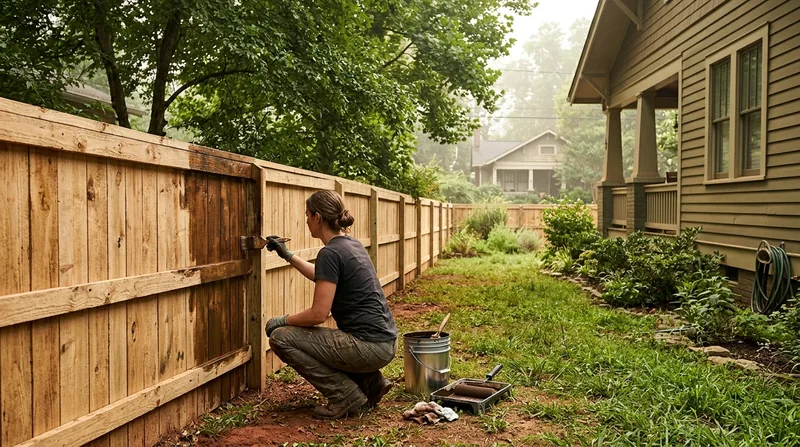




Wood fences in Durham face a relentless moisture problem. The Piedmont's humid summers, clay soil that holds water, and the region's heavy thunderstorm season combine to soak untreated wood year-round. A fence that sheds water lasts decades. One that absorbs it rots at the ground line in five to seven years. Fence staining in Durham stops that damage before it starts, extending the life of your investment and keeping the wood looking finished instead of weathered gray. We clean, seal, and restain wood fences so they shed moisture through another hot, wet summer instead of soaking it in. If your fence is still structurally sound but the finish is failing, restoration is the smarter spend than replacement. Call us at (984) 380-1829 for a free estimate, or read on to understand what the work covers and why it matters here.
Why Wood Fence Staining Matters in the Durham Climate
Durham's weather is harder on wood than most homeowners realize. Summer humidity keeps wood fiber wet even on days that look dry. Heavy rain from June through November, plus the inland remnants of Atlantic hurricanes, saturate the soil and splash mud and moisture up the fence line. Winter ice and thaw cycles work water into the grain. Posts set in clay stay damp at the ground line, where rot starts and spreads fastest. Pressure-treated pine and cedar both fail at the base without a water-shedding finish. The red clay common across Durham, Chapel Hill, and the surrounding Piedmont drains slowly, so water sits around post holes and fence bottoms for days after a storm.
A properly sealed and stained fence sheds that moisture instead of absorbing it. The finish protects the wood grain, slows color loss, and buys you years before the next restoration is needed. Without it, you are watching your fence decay in real time.
- Sealed wood resists rot at the ground line, where moisture damage begins.
- Stain protects the finish from UV fading and graying caused by sun and rain.
- A good seal on fence rails and pickets slows water absorption into the wood grain.
- Regular restoration extends fence life by 10 to 15 years compared to untreated wood.
- Maintained fences hold their resale value and curb appeal in a competitive Durham real estate market.
Restoring a fence that is still sound is always cheaper than replacing it.
Key info: Durham building codes do not mandate fence staining or sealing, but HOA architectural standards in newer subdivisions often specify wood color and finish. Check your deed restrictions before choosing a stain color. If you are in an HOA community in areas like the ones near Chapel Hill or Cary, verify that your stain choice meets the architectural guidelines before we start work.
How We Restore Your Fence: The Process from Start to Finish
Fence restoration begins with an honest assessment. We inspect the wood for soft spots, checking posts, rails, and pickets from ground level up. If rot has eaten into the structural core, that board or post is replaced. If the fence is sound but the finish is failing, we move forward with cleaning, sealing, and staining. The work happens in stages, and each one matters.
We start by pressure-washing the fence to remove dirt, mildew, and the loose outer grain that stain cannot penetrate. We then let the wood dry for 24 to 48 hours, depending on humidity and sun exposure. Once dry, we apply a clear or tinted wood sealer to the posts, rails, and pickets, paying special attention to the ground line where rot risk is highest. Finally, we apply the finish stain in your chosen color, building an even coat that sheds water and looks finished.
- We pressure-wash the fence surface to remove dirt, algae, and loose grain without damaging the wood.
- We inspect for rot and soft spots, replacing damaged boards or posts before sealing begins.
- We apply a water-repellent sealer to all exposed surfaces, with extra attention to end grain and the base.
- We finish with a stain color of your choice, applied in even coats for a uniform appearance.
- We protect nearby landscaping and property during the entire process.
The whole job typically takes three to five days for a standard residential fence, depending on size and weather.
Local example: A 150-linear-foot cedar fence in a Durham neighborhood near Duke Forest had weathered to gray and was beginning to soften at the base. We cleaned it, sealed the entire surface including the posts and rails, and applied a medium-brown stain. The fence regained its finished look and added five to seven years of life for a fraction of the cost of replacement. The homeowner also verified that the stain color met HOA standards before we started.
Staining and Sealing Methods for Wood Fences
Different wood types and fence conditions call for different approaches. A newer fence that has never been stained needs a different treatment than one that has been sealed and stained before. The wood species, the age of the existing finish, and your budget all shape which method works best. We assess the fence on site and recommend the approach that gives you the longest life for the money spent.
| Approach | Description | Best for |
|---|---|---|
| Clean, Seal, and Stain | Pressure-wash to remove dirt and loose grain, apply clear or tinted sealer, then finish stain in your chosen color. | Sound wood fences with no rot, where the finish is faded or failing but the structure is solid. |
| Strip, Sand, Seal, and Stain | Remove old stain with chemical stripper or sanding, sand the wood smooth, apply sealer, then finish stain. | Fences with multiple coats of old stain that are peeling or where a color change is desired. |
| Spot Repair, Seal, and Stain | Replace rotted or soft boards or posts, then clean, seal, and stain the entire fence for a uniform finish. | Fences with isolated rot at the ground line or scattered damaged pickets, otherwise structurally sound. |
| Sealer Only (No Stain) | Clean and apply clear water-repellent sealer without color stain, allowing the natural wood grain to show. | Newer fences or those in HOA communities where natural wood color is required or preferred. |
Fence Staining and Restoration Cost in Durham: What to Expect
Fence staining cost in Durham starts at $975 for a basic clean, seal, and stain job on a smaller residential fence. The actual price depends on the linear footage of fence, the condition of the wood, whether boards or posts need replacing, and the complexity of the site. A 150-linear-foot fence in good condition typically runs $1,400 to $2,100. A larger fence with some rot repair, or one requiring stripping and sanding, will be higher. Access matters too. A fence on a steep slope or tucked behind a house requires more labor and care than one on open, level ground.
We recommend getting two or three estimates before deciding. Our estimate is free, takes about 15 to 20 minutes on site, and includes a breakdown of what we will do and what it will cost. We do not surprise you with add-ons after the work starts. If the fence has rot that we did not catch in the estimate, we call you before we replace the board or post, so you know the price going up before we do the work.
For a detailed pricing breakdown and to understand what factors move the cost up or down for your specific fence, visit our full pricing page or call (984) 380-1829 for a free estimate.
Hiring a Fence Staining Professional Near Me: What to Look For
Finding a trustworthy fence staining contractor in Durham or the surrounding areas means checking a few concrete things. First, confirm that the contractor carries general liability and workers' compensation insurance. Ask for a certificate of insurance before work begins. Second, understand how fence licensing works in North Carolina. The state issues no fencing-specific license. Projects at or above $40,000 require a licensed general contractor, but most residential fence work falls below that threshold. We bring this up early so you know what applies to your job.
Third, get multiple estimates. A good contractor will spend time on site, ask about your HOA rules if you have them, and explain why the price is what it is. Fourth, ask for references from recent fence staining or restoration work, and call them. Fifth, if your fence is in an HOA community, check the architectural guidelines before you choose a stain color. Some communities restrict wood tones or require approval before work starts. Finally, if your fence is near a utility line, confirm that the contractor will call 811 for a utility locate before digging or disturbing the ground around posts.
- Verify that general liability and workers' compensation insurance are current, with a certificate of insurance provided before work starts.
- Understand that North Carolina has no state fencing license, and that projects above $40,000 require a licensed general contractor, which we disclose upfront.
- Get at least two or three estimates and compare what each contractor plans to do and why the price differs.
- Ask for references from recent staining or restoration jobs and follow up with calls to past customers.
- Check your HOA deed restrictions or architectural guidelines if you live in a master-planned community, and verify stain colors are approved.
- Confirm that the contractor will call 811 for utility locates before any ground disturbance near the fence line.
A contractor who answers your questions clearly and does not pressure you is worth the conversation. Contact us at our contact page or call (984) 380-1829 to schedule a free estimate and talk through your fence staining needs.
Fence Staining & Restoration in Durham: Pricing Guide
| Service | Price | Details |
|---|---|---|
| Basic fence staining and sealing | Starting at $975 | Clean, seal, and stain for small residential fences in good structural condition, no rot repair needed |
| Standard residential fence restoration | Starting at $1,400 | 150-linear-foot fence with pressure wash, sealer, and stain applied, typical Durham neighborhood lot |
| Fence with spot repairs and restoration | Starting at $1,800 | Includes replacement of one to three rotted boards or posts plus full staining and sealing of the fence |
| Large fence or stripping and restaining | On estimate | Fences over 200 linear feet, chemical stripping of old stain, or significant rot repair require site assessment for accurate pricing |
| Travel and site visit | Included | No separate mileage or travel fee for estimates or work within Durham and surrounding service areas |
| Free estimate | No cost | Response within 24 hours at (984) 380-1829, no obligation to book, detailed walkthrough and pricing breakdown on site |
Indicative pricing, the exact cost depends on square footage, finish, and site access. Free personalized estimate within 24h at (984) 380-1829.


