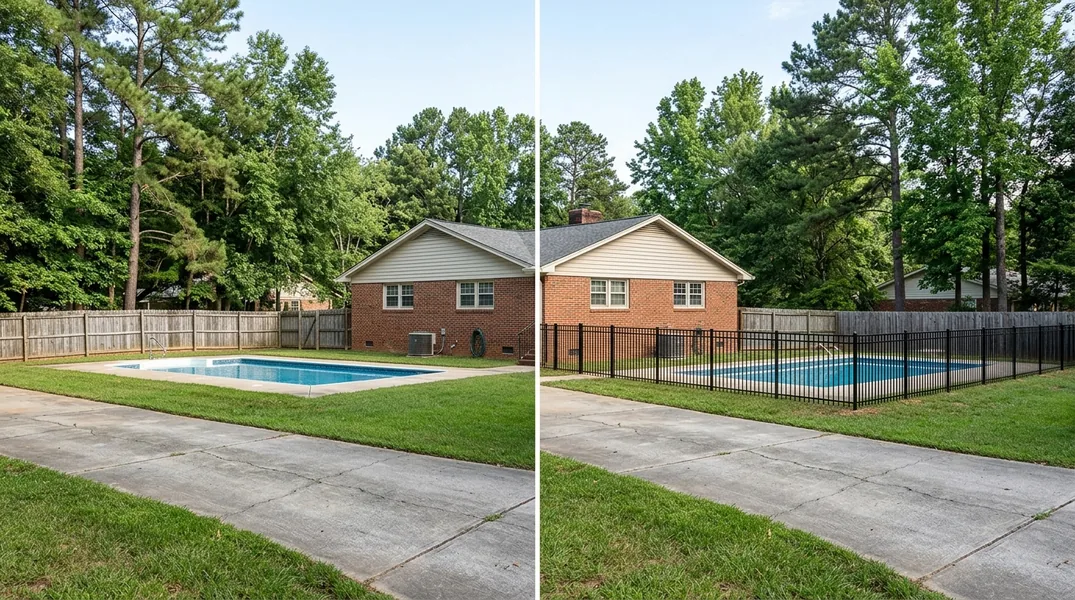
Understanding Fence on Property Line Laws in Durham
When new subdivisions develop between Durham and Chapel Hill, one of the most common questions homeowners face is: who owns the fence on the property line? The answer is more nuanced than many people expect. In North Carolina, a fence built directly on the property line is typically considered a shared structure, meaning both neighbors have equal rights and responsibilities regarding its maintenance and repair. However, the initial installation and cost allocation depend on who initiates the project and what agreements are made beforehand.
Property line fences are governed by North Carolina property law, which emphasizes neighborly cooperation and shared responsibility. If one neighbor wants to build a fence on the property line, they cannot legally do so without the other neighbor's consent. This is why many homeowners in new subdivisions work together during the initial development phase to establish clear boundaries and install fencing that benefits both properties. Understanding these legal principles before construction begins can save significant time, money, and potential disputes down the road.
Who Pays for Fence Between Neighbors: The Good Neighbor Fence Principle
The concept of a good neighbor fence is central to how most fence disputes are resolved in North Carolina. Generally speaking, if both neighbors benefit equally from a fence, they should share the cost equally. This principle has been reinforced through years of case law and is often called the 'good neighbor fence law.' When a developer is creating a new subdivision, they typically handle initial perimeter fencing as part of the development infrastructure. However, interior lot lines often require negotiation between individual property owners.
In practice, when one homeowner wants to install a Wood & Privacy Fence Installation on a shared property line, they should approach their neighbor with a proposal that includes estimated costs. If the neighbor agrees to the project and will benefit from it (for privacy, pet containment, or aesthetics), they should contribute proportionally to the expense. If a neighbor refuses to pay but the fence is built anyway, the property owner who initiated the project typically bears the full cost. This is why clear communication and written agreements are essential in new subdivision developments where multiple properties are being established simultaneously.
Fence on Property Line: Legal Boundaries and Easements in New Subdivisions
Before any fence installation begins in a new subdivision, it is critical to verify the exact property line location. Many disputes arise simply because homeowners assume where their property ends and their neighbor's begins. In Durham, subdivision developers are required to provide property surveys that clearly mark lot boundaries. These surveys should be reviewed carefully, and if there is any doubt, a professional land surveyor should be consulted. Additionally, some properties may have easements or deed restrictions that affect where fencing can be placed, particularly near utility lines or in areas reserved for future development.
Easements are particularly important in new subdivisions because utility companies often retain rights to access underground infrastructure. A fence cannot be built over a utility easement without permission from the utility company, and even then, it may need to be removable for maintenance purposes. Deed restrictions, which are common in planned communities, may also specify fence height, material, or style requirements. Before investing in any fencing project, homeowners should review their deed, survey, and any homeowners association (HOA) guidelines to ensure compliance. Durham Fence Company recommends obtaining a free estimate that includes a property line review to avoid costly mistakes.
Neighbor Fence Law in North Carolina: What You Need to Know
North Carolina's approach to neighbor fence law emphasizes mediation and mutual benefit rather than strict legal entitlement. The state does not have a statute that automatically requires one neighbor to pay for a fence simply because another neighbor wants one. Instead, courts look at whether the fence benefits both properties and whether it was built with the neighbor's knowledge and consent. This means that in new subdivisions where fencing is part of the planned infrastructure, developers and homeowners must work collaboratively to establish clear expectations from the beginning.
One important aspect of North Carolina fence law is the concept of 'spite fences.' A spite fence is one built primarily to annoy or injure a neighbor rather than to provide legitimate benefit. North Carolina courts have ruled that spite fences can be enjoined (stopped) even if they are technically on the property owner's own land. This principle protects neighbors from malicious fencing practices and reinforces the importance of maintaining good relationships during subdivision development. When new homes are being built close together, as is common in modern subdivisions, establishing positive fence relationships early prevents future legal conflicts and creates a more harmonious community atmosphere.
Wood and Privacy Fence Installation Cost in Durham: What to Budget for New Subdivisions
When planning fence installation in a new subdivision, understanding the cost structure is essential for budgeting and negotiating with neighbors. Wood & Privacy Fence Installation is one of the most popular options in the Durham area because it offers excellent privacy, aesthetic appeal, and reasonable pricing. The cost of a fence depends on several factors, including the total linear footage, the height of the fence, the quality of materials, site conditions, and local labor rates. A typical wood privacy fence in the Durham region ranges from $25 to $45 per linear foot installed, meaning a 100-foot fence could cost between $2,500 and $4,500.
For new subdivisions where multiple properties are being fenced simultaneously, homeowners may be able to negotiate volume discounts with installation contractors. Additionally, some HOAs or developers offer preferred contractor lists that can help reduce costs. If two neighbors are splitting the cost of a fence, the total per-property expense becomes significantly more manageable. When comparing options, homeowners should also consider alternatives like Vinyl & PVC Fence Installation or Chain Link Fence Installation, which may have different upfront costs and long-term maintenance expenses. Contacting Durham Fence Company at (984) 380-1829 for a detailed free estimate is the best way to understand your specific options and costs.
Planning Fencing for New Subdivisions: Best Practices and Communication Strategies
Successful fence installation in new subdivisions begins with clear communication and planning. Before construction starts, homeowners should identify which properties will share fences and initiate conversations with future neighbors about preferences, budget, and timeline. In many cases, developers or HOAs will establish fencing guidelines that all residents must follow, which actually simplifies the process by ensuring consistency across the community. These guidelines typically specify materials, colors, heights, and setback requirements. When everyone follows the same standards, the neighborhood looks cohesive, and disputes are less likely to arise.
Documentation is equally important. Once neighbors agree to share the cost of a fence, that agreement should be put in writing, even if it is just a simple email outlining the cost split, timeline, and maintenance responsibilities. This prevents misunderstandings later and provides a reference point if disputes arise. Homeowners should also verify that the contractor they hire is properly insured, and experienced in the specific type of fence they want installed. Whether you choose Aluminum & Ornamental Iron Fencing for a more formal appearance or traditional wood privacy fencing, working with a reputable local company like Durham Fence Company ensures the job is done correctly and in compliance with all local regulations and property line requirements.
Looking for a professional fence contractor in Durham? Durham Fence Company responds fast for all your fence needs.
Get a Free Quote