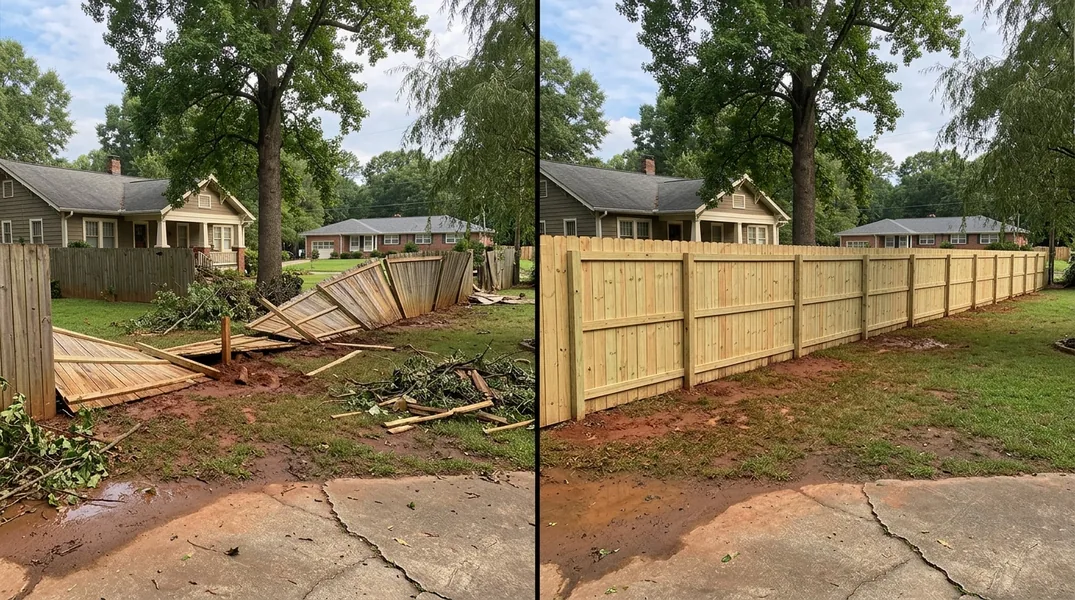
How Winter Storms Impact Your Fence
Winter in Durham can be unpredictable, and when ice and wind arrive together, your fence becomes vulnerable to serious damage. Many homeowners don't realize how much stress seasonal weather places on fence structures until after a major storm passes through. The combination of heavy ice accumulation and strong winds creates a perfect storm for fence failure, especially in older installations or those that haven't been properly maintained.
Ice adds tremendous weight to fence boards and posts. A single inch of ice buildup can add hundreds of pounds of pressure to your fence structure. When wind gusts then push against this ice-laden fence, the stress on the wood, fasteners, and posts becomes extreme. Posts that were stable for years can suddenly shift or crack. Boards that seemed solid may splinter or break. The damage isn't always immediately obvious either, which means your fence could be compromised without you realizing it until the next storm hits.
Common Fence Damage After Winter Storms
After a severe winter storm, homeowners in Durham often discover several types of damage. Leaning or tilted posts are among the most visible problems. When frozen ground thaws or when ice pressure shifts the post foundation, the entire fence line can lean away from its original position. This not only looks unattractive but also compromises the structural integrity of your fence. Wind damage often manifests as cracked or split boards, broken pickets, or sections that have separated from the posts entirely.
Another common issue is damage to the fasteners and hardware holding your fence together. Nails can loosen or pop out, screws can shear off, and metal brackets can bend under the stress of ice and wind. Even if the wood itself survives the storm intact, a fence with compromised fasteners becomes unstable and unsafe. Additionally, ice can cause hidden damage beneath the soil line. Posts that sit in frozen ground may develop cracks or rot as the freeze-thaw cycle repeats, weakening the foundation that holds your entire fence upright.
Wood and Privacy Fence Installation Near Me: When to Call a Professional
If your fence has sustained storm damage, the question becomes whether you should attempt repairs yourself or call a professional. For minor issues like a single loose board or a few missing pickets, a handy homeowner might manage repairs. However, for structural problems like leaning posts, multiple broken boards, or damage affecting more than one section, professional help is essential. Wood & Privacy Fence Installation specialists have the expertise to assess damage correctly and determine whether repairs or replacement is the best solution.
Professional fence contractors can evaluate the extent of damage, identify safety hazards, and recommend the most cost-effective repair strategy. They have the proper tools, equipment, and experience to work safely on fence repairs, especially when dealing with heavy or unstable sections. Attempting major repairs without the right knowledge can actually make problems worse or create new safety issues. If you're unsure about the severity of your fence damage, contact Durham Fence Company at (984) 380-1829 for a professional assessment.
Prevention and Maintenance: Protecting Your Fence Year-Round
The best defense against winter storm damage is preventive maintenance. Before the cold season arrives, inspect your fence thoroughly for existing weaknesses. Look for soft spots in wood that might indicate rot or decay, check that all fasteners are tight and secure, and ensure that posts are standing straight and true. Any existing damage should be repaired before winter storms arrive, as damaged sections are far more likely to fail when stressed by ice and wind.
Regular maintenance also includes keeping your fence clean and dry. Remove debris from around the base of your fence, ensure proper drainage so water doesn't pool near posts, and consider applying a protective sealant or stain to wood fences. These steps help prevent rot and weathering that weaken the wood structure. During winter, after heavy snow or ice storms, gently remove accumulated ice from your fence if it's safe to do so. Never use salt or harsh chemicals on wood fences, as these can accelerate deterioration. If you're unsure about your fence's current condition or need maintenance advice, the team at Durham Fence Company can help.
Assessing Repair Versus Replacement After Storm Damage
When winter storms damage your fence, you'll need to decide whether repairs make financial sense or if replacement is the better investment. A fence that's only a few years old with damage isolated to one or two sections is usually a good candidate for repair. However, if your fence is older, the damage is widespread, or multiple sections are affected, replacement might be more economical in the long run. Replacement also gives you the opportunity to upgrade to more durable materials or improve your fence's design.
The pricing for repairs versus replacement depends on several factors, including the extent of damage, the type of fence material, and the size of the affected area. A professional inspection can help you understand your options and make an informed decision. Whether you choose repair or replacement, working with an experienced contractor ensures the job is done correctly and your fence is restored to full functionality and safety. Durham Fence Company offers free consultations to help homeowners understand their options after storm damage.
Preparing Your Fence for Next Winter
After dealing with storm damage, many homeowners want to know how to better protect their fence in the future. If you have an older fence that suffered significant damage, upgrading to more weather-resistant materials might be worthwhile. Vinyl & PVC Fence Installation offers excellent durability in harsh winter conditions, as vinyl doesn't rot, crack, or splinter like wood. Alternatively, Chain Link Fence Installation provides a low-maintenance option that withstands wind and ice effectively.
If you prefer to keep your wood fence, focus on strengthening it against future storms. Ensure posts are set deep in the ground with proper concrete footings, use quality fasteners that won't loosen easily, and maintain regular inspections and maintenance. Proper drainage around your fence prevents water damage and rot. Bracing weak sections or adding additional support to vulnerable areas can also improve storm resistance. Whatever approach you choose, the key is taking action before the next winter storm arrives. Contact Durham Fence Company at (984) 380-1829 to discuss options for making your fence more resilient to winter weather.
Looking for a professional fence contractor in Durham? Durham Fence Company responds fast for all your fence needs.
Get a Free Quote